Designing Fantasy Creatures That Feel Real
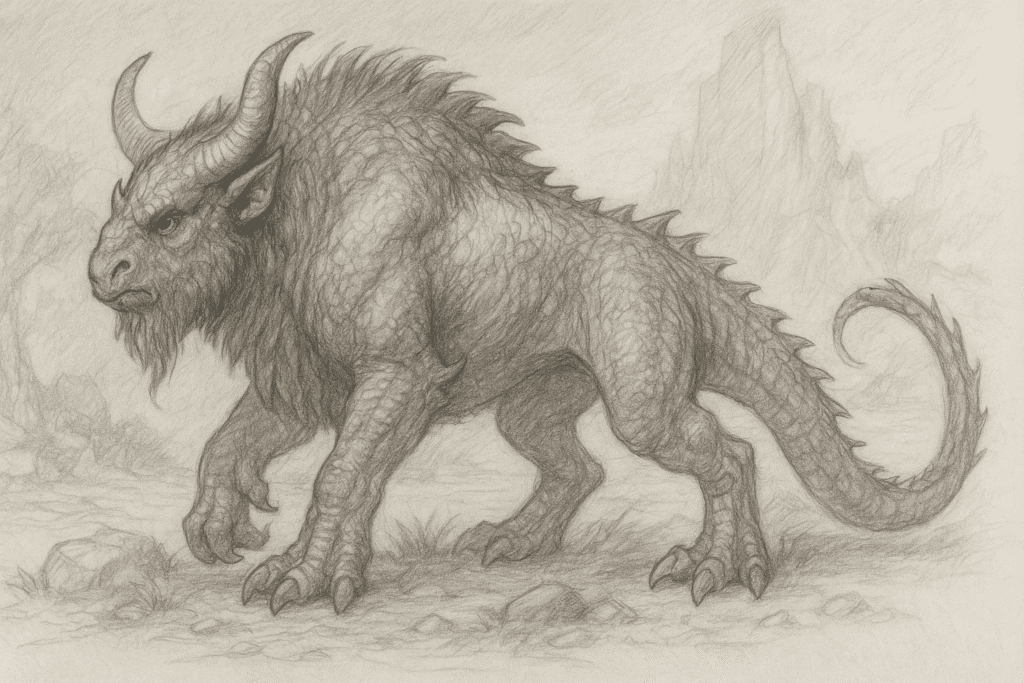
Alright, let’s talk monsters.
Not the kind hiding under your bed — the kind you draw. The ones with claws, horns, wings, or whatever nightmare anatomy your brain comes up with after three cups of coffee and too much reference scrolling.
Because here’s the thing: good creature art isn’t just about slapping wings on a horse and calling it a dragon. The creatures that stick in your head — the ones that feel alive — are built on structure, logic, and a little bit of biology-inspired witchcraft.
Let’s break that down.
The Boring Truth About Great Fantasy Design
Every great fantasy creature starts with something real. You can’t design a believable griffin if you’ve never looked at how a bird’s wings attach to its skeleton. You can’t make a sea monster convincing if you don’t know how fish bodies bend in water.
Imagination builds from observation.
So before you start sketching your next cosmic beast, study animals like a scientist. Notice where bones sit under skin. Watch how joints move. Learn how muscle groups support weight. Once you understand that, then you can start twisting nature into new shapes that still make sense.
Because believable doesn’t mean realistic — it means logical.
The “Rule of Two” for Creature Hybrids
Here’s a rule that’ll save you from creating Frankenstein soup: only merge two creatures at once.
Why? Because our brains love simplicity.
Take a horse and a bird — boom, pegasus. It’s elegant, it reads instantly, and your audience gets it. Add a third element, like a shark tail, and it starts looking confused.
Unless you’re designing a chaos god, keep it to two main influences and one defining twist. That twist is what makes it yours — a new proportion, a strange texture, or an unexpected feature placement.
Example: a lion with mantis legs. That’s just one weird adjustment that suddenly gives the design personality and movement logic.
Anatomy First, Weirdness Later
Here’s the trap most people fall into: they start with “cool” before they start with “function.”
You know the drill — twenty horns, extra eyes, spikes everywhere. It looks awesome… until you try to make it move. Suddenly the limbs don’t align, the neck can’t turn, and your creature looks like it’s dying in slow motion.
So start simple. Build a believable skeleton. Add muscles. Imagine how it stands, how it runs, how it breathes. Then, and only then, dress it in the weirdness — scales, wings, armor plates, bioluminescent veins, whatever your world demands.
When the structure works, everything else becomes convincing automatically.
How to Make It Feel Alive
Movement sells believability. If your creature looks like it’s mid-motion — bending, stretching, twisting — it feels alive even in still art.
Use rhythm in your shapes. Think of “S” and “C” curves as your design’s heartbeat. Hard angles show tension, smooth curves show calm. Mix them to tell mood through anatomy.
And pay attention to gravity. Heavy creatures should look heavy — legs wide, chest low, center of gravity stable. Light ones should feel airborne — weight lifted through chest, limbs narrow, curves flowing upward.
The more you think about how your creature moves, the less it looks like a costume.
The Art of Borrowing Without Copying
When you look at a crocodile or a hawk, you’re not stealing — you’re studying design that evolution already perfected.
Take what’s essential. Crocodile scales for durability. Hawk vision for awareness. Cat paws for stealth. Combine them with intent. Every feature should have a reason to exist in your world.
Don’t just glue features together — translate them.
If your world is volcanic, give your creatures heat vents like whales’ blowholes. If it’s arctic, study how polar bears store fat and reflect light through fur. That’s how you create designs that look made for their environments.
Worldbuilding starts with anatomy.
Texture Is Storytelling
Textures aren’t just surface details — they’re clues. They tell us where the creature lives, what it eats, how it survives.
Cracked, dry skin suggests desert heat. Smooth, reflective scales scream underwater life. Mossy fur means damp forest.
So instead of adding random bumps and wrinkles, think like a biologist. Why does that texture exist? Does it camouflage? Protect? Intimidate?
That single thought turns decoration into storytelling.
My Favorite Creature Design Trick
Flip it upside down.
Literally. Take an animal photo, rotate it 180 degrees, and sketch a new creature from the shapes. Suddenly your sense of proportion resets. What used to be a head becomes a torso. Wings become legs. You stop relying on memory and start inventing.
It’s the fastest way to break your own habits and find new silhouettes.
The Emotional Core of Monsters
Even fantasy creatures need emotion.
A snarling dragon is boring. But a dragon protecting its eggs? That hits different.
When you give a creature purpose — hunger, fear, curiosity, pride — it becomes a character, not a prop. That emotional anchor helps you design expressions, poses, and details that align with who or what it is.
You’re not drawing anatomy anymore — you’re drawing life.
Common Creature Design Mistakes
- Too much symmetry – Perfect symmetry kills realism. Nature is messy. Break something slightly off.
- Over-detailing early – Form before texture. Detail comes last.
- Ignoring silhouette – If your creature’s outline isn’t readable, it fails instantly.
- No scale cues – Add something for reference: trees, humans, rocks.
- Forgetting breath – Even mythical creatures need to look like they inhale and exhale.
You’d be shocked how often “breathing” makes a design suddenly feel real.
Why It’s Addictive
Designing creatures feels like cheating nature. You get to take everything cool about biology and remix it like a DJ.
It’s also deeply satisfying because you’re building something new that still feels possible. Every muscle line, every texture stroke, every hint of logic makes your viewer go, “Wait, could that actually exist?”
And when that happens — you’ve won.
Quick Practice Plan
- Pick two real animals.
- List what each does best (speed, armor, wings, smell, etc).
- Combine them into a single creature with one dominant theme.
- Sketch three silhouette options.
- Pick one and refine the anatomy.
If you do that ten times, you’ll have a creature library ready for any world you want to build.
Final Thought
The best fantasy creatures aren’t random. They’re believable illusions. They move like they have lungs, they stare like they think, and they carry the logic of real anatomy inside impossible skin.
Your goal isn’t to make something pretty. It’s to make something alive.
So grab your pencil, study your favorite animals, and start building worlds one bone at a time.
👉 Use the Fantasy Creature Drawing Prompts
Because your next great creature might be hiding inside the anatomy of a crab, a falcon, or even your pet cat.
